
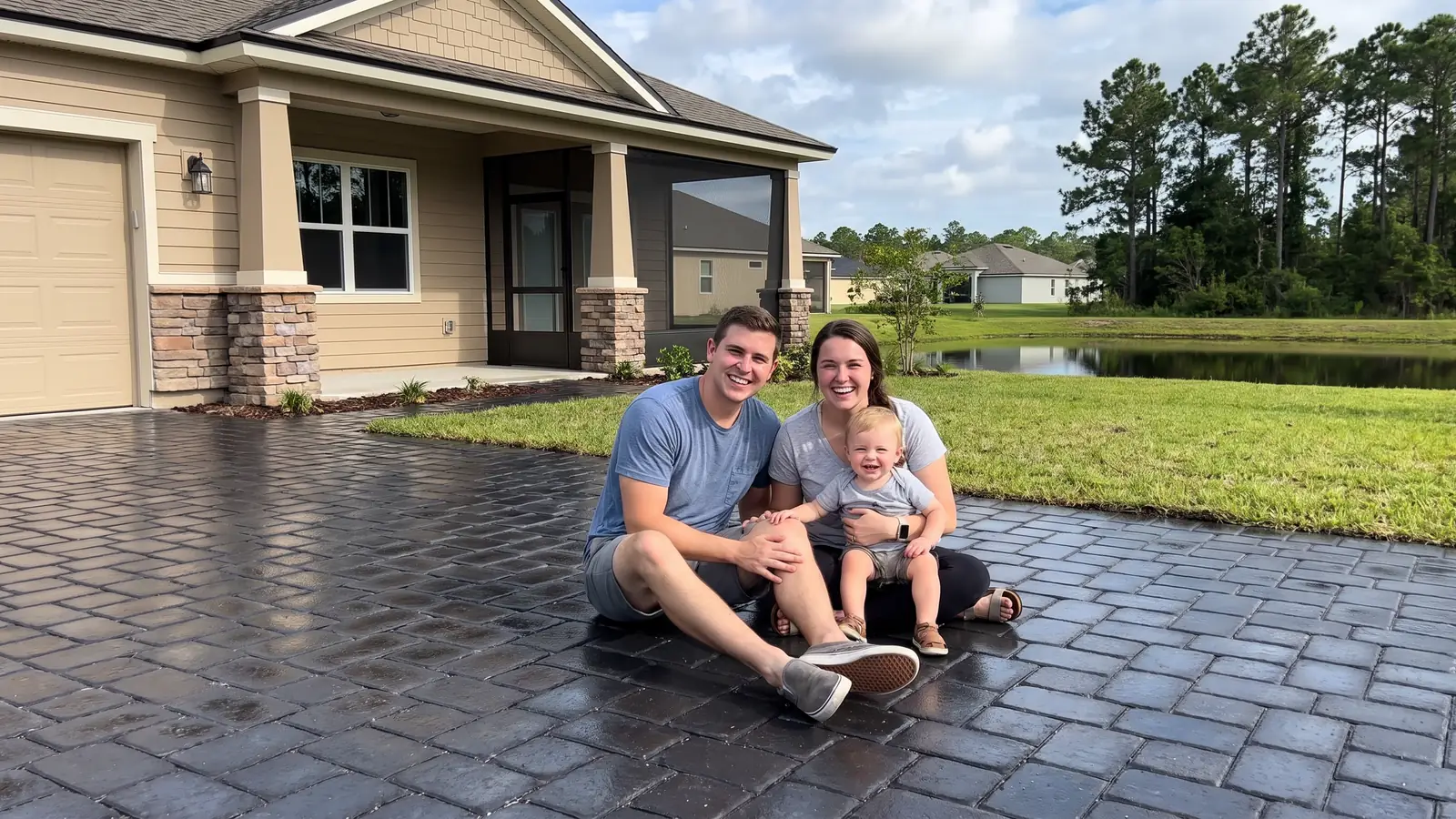
Paver sealing for Cedar Hills homes
Paver Sealing in Cedar Hills, FL
Cedar Hills ranch homes sit far back from the street, so call (904) 467-7129 to get that long drive sealed.
- Brings out deeper paver color
- Fresh joint sand helps lock pavers in place
- Gives weeds less room to grow
- Makes the surface easier to keep clean
- Free estimate, no obligation
Request a Free Estimate
Free, no obligation.
Fast, careful paver sealing in Cedar Hills
Paver sealing is available across Cedar Hills, from Blanding Boulevard to Lane Avenue and down to the Cedar River. A local contractor cleans, re-sands and seals driveways, front walks and back patios, and the estimate is free. That covers Cedar Hills Estates, Sweetwater and the lots near Wilson Boulevard and Harlow Boulevard. When you ask for your free estimate, expect a reply within 1 business day, usually much sooner.
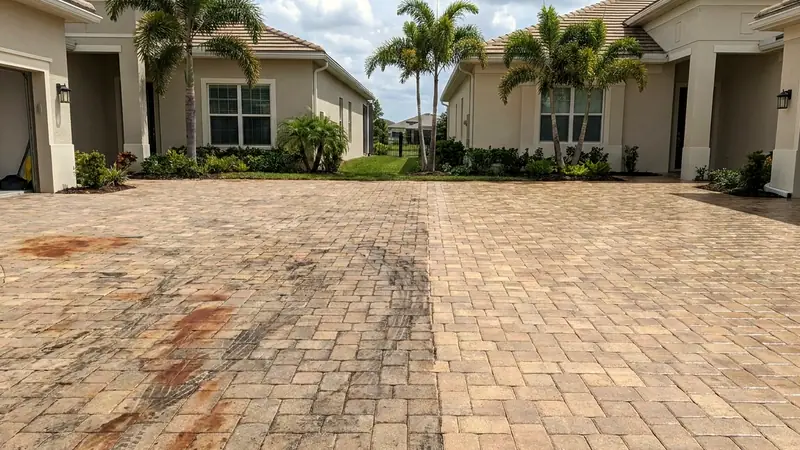
Picture a long drive that has gone pale in the sun, with tire marks at the garage and weeds along the edges. After a wash, fresh joint sand and a new coat, the color comes back from the street to the garage door. The joints sit full, and the edges stay tight. To talk it through first, call (904) 467-7129 and describe what you see at your Cedar Hills home.
Why hire a local paver sealing contractor in Cedar Hills?
Cedar Hills homeowners tend to pick a contractor who knows long ranch-style drives, mid-century lots and Westside drainage ditches. To hear how that fits your property, ask for your free estimate.
A free look at the whole lot
A contractor walks your Cedar Hills drive, front walk and patio before giving a price. Nothing is owed for the visit.
A published price range
Northeast Florida companies commonly publish $1.75 to $3.25 per square foot to clean, sand and seal. Line up any Cedar Hills bid against that.
Your finish, your choice
Many Cedar Hills homes have no HOA, so matte or wet look is up to you. Wet look shows scuffs sooner.
No obligation
You pick the date and decide whether to go ahead at all. A Cedar Hills estimate never locks you in to hiring anyone.
Get Your Free Estimate in Cedar Hills
Tell us about your pavers in Cedar Hills.
Free, no obligation
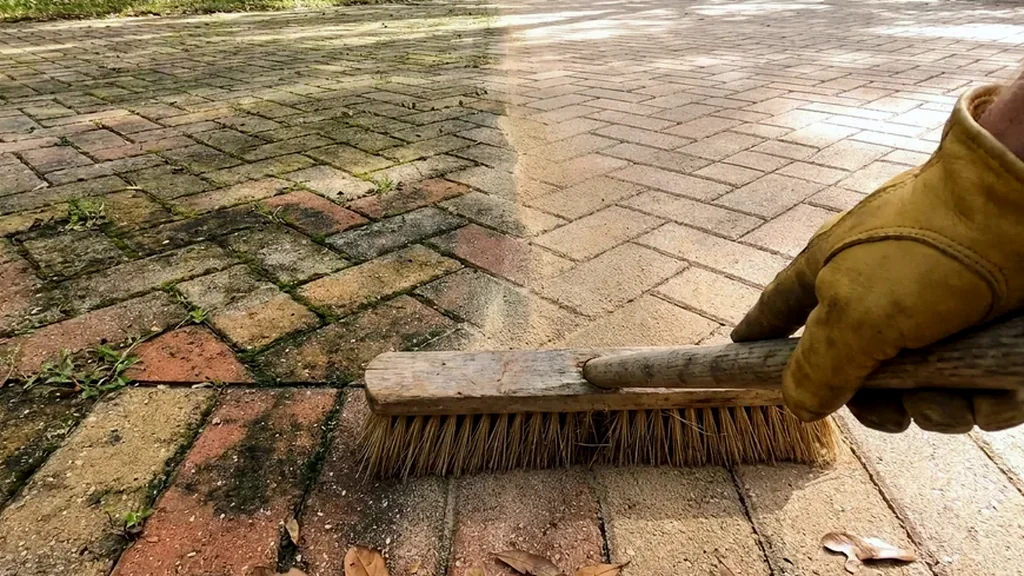
What paver problems show up most in Cedar Hills?
Runoff from a blocked storm drain
A longtime Cedar Hills homeowner told News4Jax that a blocked storm drain next door flooded nearby houses and made the ground cave in. Ditches and canals run all through the neighborhood, and they do not always drain the way they should. When water sits on pavers or runs under them, it can wash out joint sand and soften the base. A local sealing company says washouts speed up once water pools in low spots. If your lot backs up to a ditch or drain, show the contractor where water goes in a storm. A sunken patch should be repaired before any coat goes on. On a long ranch-style drive, the end closest to the street often wears first.
Long drives baking in full sun
Cedar Hills lots usually have wide front setbacks, so homes sit well back from the street. That often means a long driveway and front walk with no shade over them. One Jacksonville paver company puts driveways in full sun at about 18 to 24 months between coats. Sun fades red and tan pavers to a chalky pastel. A fresh coat brings back the depth, which makes the whole front yard look cared for. A pressure wash on its own does not stop sand from leaving after the next storm.
Wear at the garage apron
Ranch homes here were built with attached garages, so every trip in and out turns the tires on the same pavers. A local company says turning tires and road grime shorten the time between coats. The apron by the garage door often shows black marks and loose sand first. Oil drips from parked cars add to it. Those spots need extra cleaning before sealing, or the marks get locked under the coat. Ask the contractor to point out what can and cannot come out before work starts.
Brick, stucco and wood beside the pavers
Cedar Hills ranch houses mix stucco, brick and wood on the outside, often right where the patio meets the wall. Rinse water and cleaners need care along that line. The sliding glass door onto the back patio is another spot to protect. A careful contractor tapes or covers what needs it and keeps the spray low near the house. That small step saves a cleanup bill later. Ask how the crew plans to protect each of these surfaces.
An old coat from a past owner
Many Cedar Hills Estates homes date to around 1960 and have had several owners. Few people know what went on their pavers before they moved in. One Jacksonville company says roughly one job in ten to one in five needs an oil-based coat stripped first. White, hazy or flaking sealer also has to be stripped before a new coat, a local cost guide notes. Because water-based sealer cannot go over solvent-based sealer, a Cedar Hills contractor tests before choosing. Keep any old can or receipt you find in the garage, since it can answer the question fast.
Does paver work change between Cedar Hills Estates, Sweetwater and the river lots?
Yes, a little, because each area was built at a different time. Cedar Hills Estates homes mostly date from 1955 to 1971, and 21 current listings there say there is no HOA. That usually means you choose the finish without an approval form. When you ask for your free estimate, mention which part of Cedar Hills you live in.
Sweetwater sits inside Cedar Hills near Wilson Boulevard and I-295, and freed people settled it after the Civil War. Its streets carry Biblical names like Luke, Esther and Moses, and most of its buildings went up from 1949 to 1953. Pavers on those lots may have been added long after the houses went up. Call (904) 467-7129 and the contractor can check the base and the old coat in one visit.
Along the Cedar River, many first homes have been enlarged or torn down for much bigger ones. Bigger homes often come with more paver area, such as a wide drive, a side walk and a large patio. The Cedar Hills Estates data shows no sampled homes in a federal flood zone, with a median elevation of 27 feet. To get a price on a larger lot by the river, ask for your free estimate.
What does paver sealing cost in Cedar Hills?
Cedar Hills pricing tends to track the $1.75 to $3.25 per square foot that Northeast Florida companies commonly publish to clean, sand and seal. A long Cedar Hills drive adds square feet, but concrete pavers are the least costly kind to seal. Sunken spots, heavy stains and an old coat to strip push a job higher. To get a figure for your own lot, ask for your free estimate, and the estimate is free.
Size cuts both ways. A Jacksonville cost guide says small jobs cost more per square foot, since prep time does not shrink with the surface. Sealing a long drive, the front walk and the patio at once spreads that setup cost. Call (904) 467-7129 and ask how your Cedar Hills layout affects the price.
| Paved area | Typical example | Clean, sand and seal |
|---|---|---|
| 300 sq ft | Small patio or walkway | $525 to $975 |
| 600 sq ft | Two car driveway | $1,050 to $1,950 |
| 1,000 sq ft | Large driveway or pool deck | $1,750 to $3,250 |
| 1,500 sq ft | Driveway plus pool deck | $2,625 to $4,875 |
Math based on the $1.75 to $3.25 per square foot that Northeast Florida paver companies published as of November 2026. Your contractor sets the actual price after seeing the surface. Repairs, leveling and stripping failed sealer are usually extra.
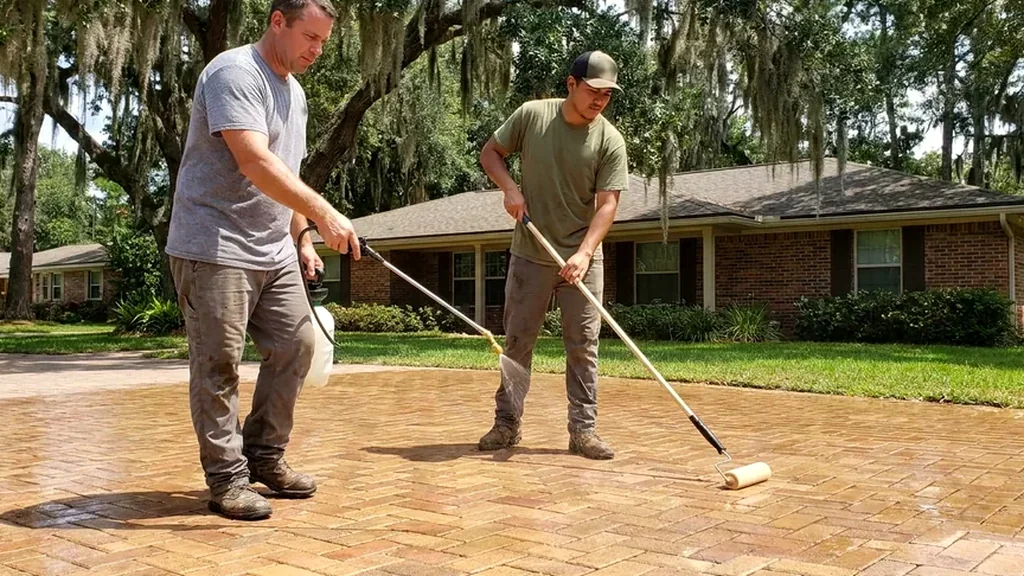
How does a paver sealing job work in Cedar Hills?
Walk the lot and find where water goes
The contractor walks your Cedar Hills pavers from the street to the backyard. Low spots, missing sand and edges near a ditch or drain get noted. Any old coat gets a quick test, since a water-based product cannot go over a solvent-based one. Low patches are reset before sealing, because the coat holds any dip it covers. Show the contractor where water sits after a storm. Any loose border pavers are reset at the same time.
Clean the drive, walk and patio
The wash comes next, with extra time on the garage apron where tires and oil leave marks. Green film along shaded edges gets treated in the same pass. Rinse water stays low and away from stucco, brick and wood near the house. The sliding glass door gets covered if the patio sits right below it. Some deep oil stains only fade, so ask what the wash can remove. Leaves and dirt get blown out of the joints first.
Put the sand back
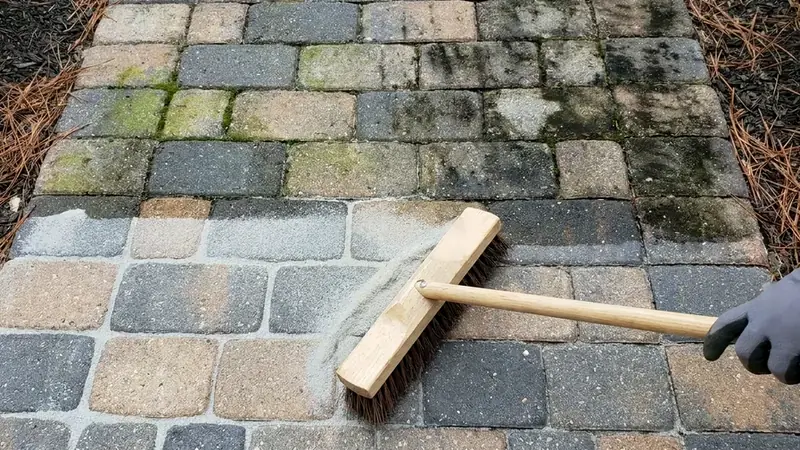
Washing pulls sand out of the joints, so fresh sand goes in before any sealer. Some local companies use kiln-dried sand that a flood coat of sealer locks in place. Polymeric sand can stay soft in humid weather, which is worth asking about. Sand color can be matched to your pavers. Full joints keep the pavers from shifting under daily traffic. A sweep and a blower clear the faces so no sand gets sealed on top.
Let it dry all the way
Sealer needs a dry surface, and Jacksonville summer storms can arrive by midafternoon. A long drive in full sun may dry fast, while a low spot by a ditch stays damp. A careful contractor checks every section before starting. If rain is in the forecast for that evening, the date moves. Shady strips along the house usually take the longest.
Seal and close the drive
The coat goes on in the finish you picked, sprayed and then evened out so it dries without puddles. One Jacksonville company says to wait 2 to 4 hours before walking on it and 24 hours before parking. A cost guide says most pavers here need a new coat every three to five years, with driveways closer to three. Park on the street overnight, and keep sprinklers off until it sets. Write down the product name so the next Cedar Hills coat matches.
Complete paver services in Cedar Hills
A Cedar Hills job goes wash, re-sand, dry and seal, in that order. The wash clears tire marks, grime and green film, and fresh sand refills the joints it opened. Any sunken patch gets reset before the coat goes on. To hear how long each step takes on your lot, call (904) 467-7129.
Long front drives here take sun, turning tires and oil drips at the garage. Front walks take foot traffic and sprinkler spray, and back patios by the sliding door take furniture and shade. Each surface wears at its own pace. Name every area you want done when you ask for your free estimate.
Sealer comes down to water-based or solvent-based, then to a matte or wet look. Concrete pavers, the most common kind, are also the least costly to seal. If a past owner left a solvent-based coat, a water-based product cannot go over it. Call (904) 467-7129 to sort out which suits your Cedar Hills pavers.
Jacksonville gets most of its rain from May to September, often in short, heavy storms. Sealer needs a dry surface, and low spots near a ditch may stay wet longer than the open drive. One local company says spring and fall often bring the steadiest weather. For a date that fits, ask for your free estimate.
Questions to ask before you hire
- Do you check the forecast for the day after the job, or only the day of?
- Does the price cover the wash, the joint sand and fixing any sunken spots?
- Have you sealed pavers in neighborhoods where the HOA limits how shiny the finish can be?
- How many coats of sealer do you put down?
- How do you keep sealer off my garage door, my stucco and my car?
- How do you measure the square footage for my quote?
- Will the cleaning take care of the black mildew in my shady corners?
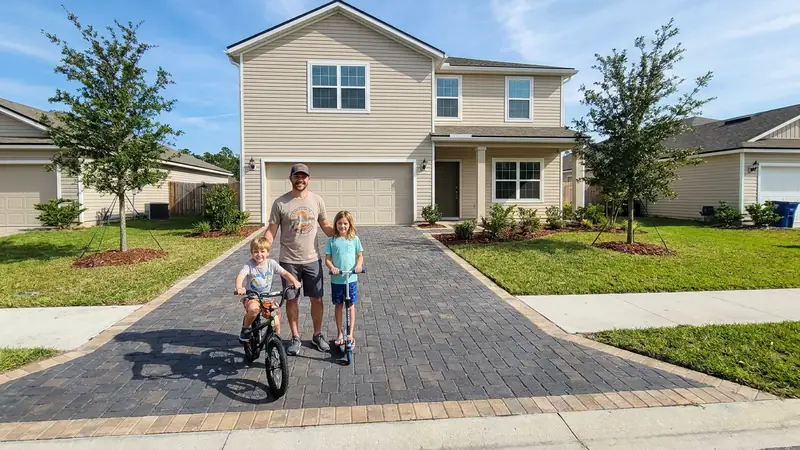
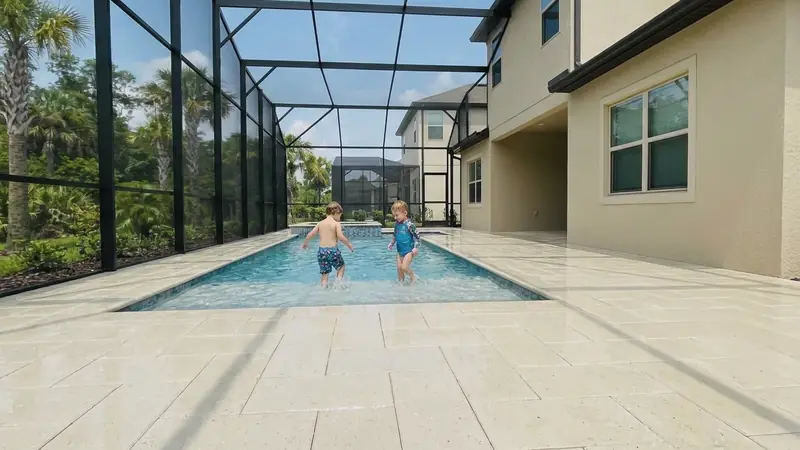
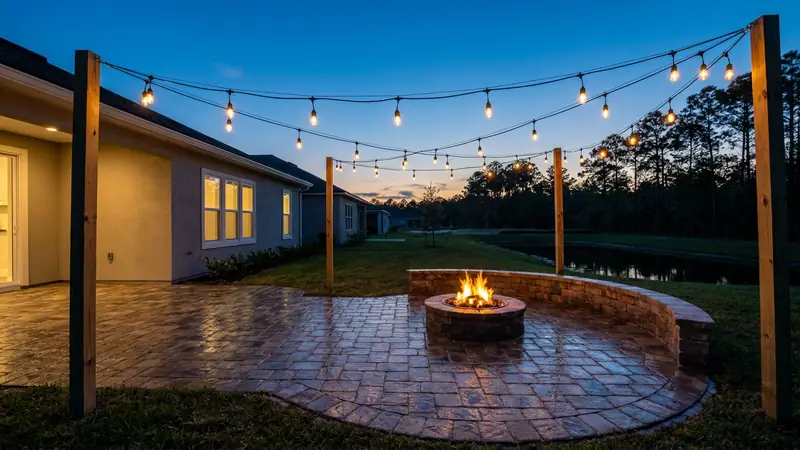
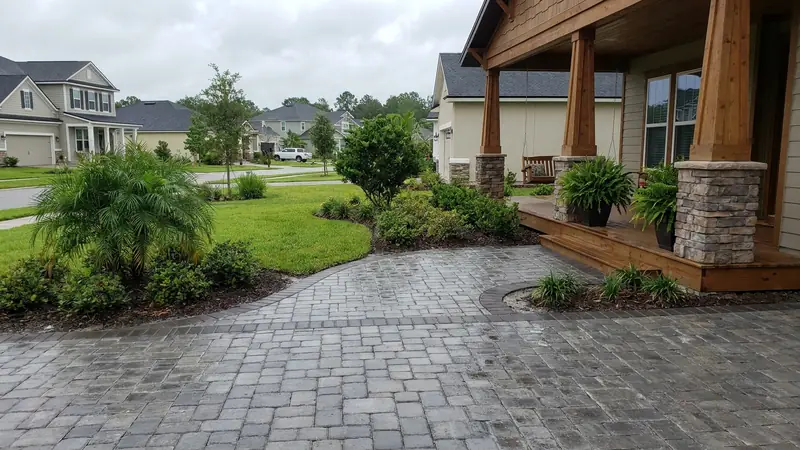
What do sealed pavers look like around Cedar Hills?
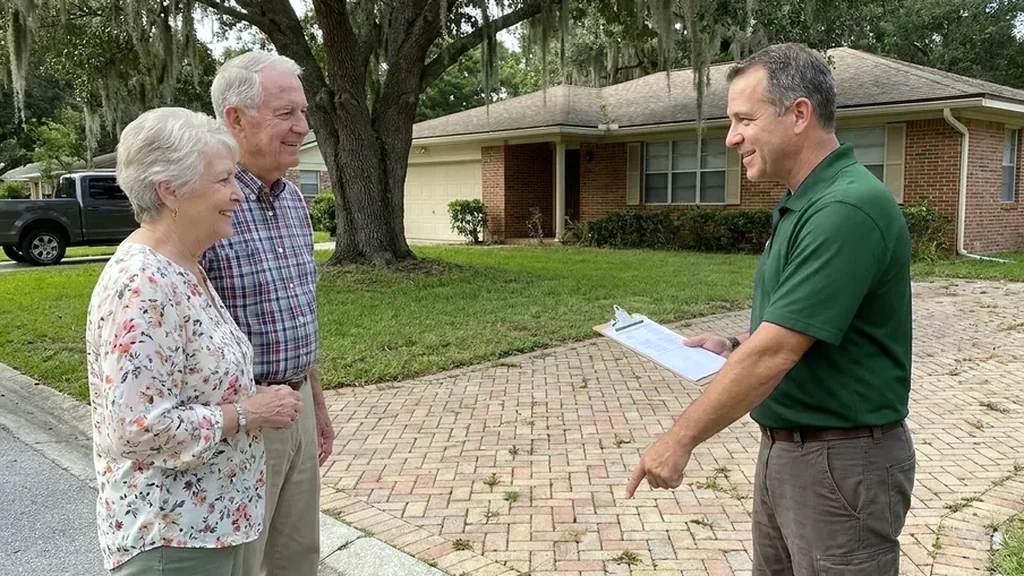
Why local matters in Cedar Hills
A contractor who knows Cedar Hills will ask whether your lot sits near a drainage ditch or storm drain. That answer changes how the base gets checked and how long the pavers need to dry. Someone working from across town may skip the question. To reach a contractor who works Cedar Hills and the rest of the Westside, call (904) 467-7129.
Local experience also helps with mid-century lots. Pavers here were often added decades after the house was built, sometimes in several stages. A contractor who sees a lot of these homes knows to check the base, the edges and the old coat before quoting. You can ask for your free estimate and ask what a contractor checks first on a mid-century Cedar Hills lot.
Weather is the last piece. A clear Westside morning can turn into a downpour by afternoon, and damp pavers ruin a coat. A contractor nearby can shift your Cedar Hills date on short notice when the forecast changes. If you have a date in mind, ask for your free estimate with no obligation to hire anyone.
Which Cedar Hills landmarks are near your street?
The Webb Wesconnett library at 103rd Street and Harlow Boulevard is a good marker for the south side. In the Sweetwater area, the old 1957 National Guard Armory is now a community center named for Mary Lena Gibbs, with Barco Field beside it. Mary Lena Gibbs ran a free kindergarten for Sweetwater children for years. If you live near either one, ask for your free estimate and give your cross street.
On the east side, Adventure Landing sits at 4825 Blanding Boulevard, with go-karts and mini golf. Wilson Boulevard, finished in 1955, still carries much of the traffic through the neighborhood. To the south, the Cedar River draws weekend anglers after fish moving in from the St. Johns. Near any of these Cedar Hills spots, call (904) 467-7129 and name your street.
Frequently Asked Questions
What do homeowners in Cedar Hills pay to have pavers sealed?
Most Cedar Hills jobs fall between $1.75 and $3.25 per square foot to clean, sand and seal, the range Northeast Florida companies commonly publish. A plain concrete paver drive in Cedar Hills often sits lower in that range. Sunken spots, deep stains and old sealer push the price up. Ask for the square footage on the quote.
How much does it cost to seal outdoor pavers at a Cedar Hills home?
The total depends on square feet and condition, at $1.75 to $3.25 per square foot. A long Cedar Hills drive adds area, while a small patio alone costs more per foot because setup stays the same. Doing all your surfaces at once spreads that setup cost.
Why is paver sealing so expensive in Cedar Hills?
In Cedar Hills, the bulk of the bill is the prep work that comes before any sealer. Washing, refilling joints, fixing low spots and waiting for dry pavers take hours. Stripping an old oil-based or failed coat adds more time on some Cedar Hills homes.
How often should pavers be sealed in Cedar Hills?
Most companies quote two to five years between coats for Cedar Hills pavers. One Jacksonville company says sunny driveways need a new coat about every 18 to 24 months. Long, open Cedar Hills drives tend to sit near the shorter end. A shaded back patio can often go longer than the drive out front.
Is it better to spray or roll sealer on Cedar Hills pavers?
Many pros spray first and then roll. One Jacksonville company sprays heavy soak coats through special tips, and another rolls any puddles flat so the coat dries evenly. Ask the contractor how the coat on your Cedar Hills drive will go on.
Do Cedar Hills homes need HOA approval to seal pavers?
Most do not. In Cedar Hills Estates, 21 current listings say the home has no HOA. If your home is in a newer pocket with an association, check its rules before you change the color or sheen. Without an association, the finish is your call alone.
Can a blocked storm drain hurt my Cedar Hills pavers?
Yes, standing or running water can wash out joint sand and soften the base. A Cedar Hills homeowner told News4Jax a blocked drain flooded homes and made the ground cave in. Report a blocked drain to the city, and have sunken pavers reset before sealing.
Is polymeric sand a good idea for Cedar Hills joints?
It can struggle here. One Jacksonville company says polymeric sand has to stay dry a long time to set and can stay soft in humid weather. Ask the contractor which sand they plan to use and how the sealer locks it in. Some local companies use kiln-dried sand locked in by a flood coat of sealer instead.
Ready for a Free Estimate in Cedar Hills?
Call (904) 467-7129 and tell us about your pavers.
Free, no obligation